
Techniques and Tips for Excellence in the Kitchen
Mastering cooking is not about following a list of instructions, but about understanding the fundamental techniques that allow you to work with ingredients with judgment. Here we break down the skills that make the difference between heating up food and actually cooking.
- 01Cutting
- 02Stocks
- 03Heat
- 04Sauces
- 05Fish
- 06Dough
- 07Preservation
- 08Tricks
The Art of Cutting
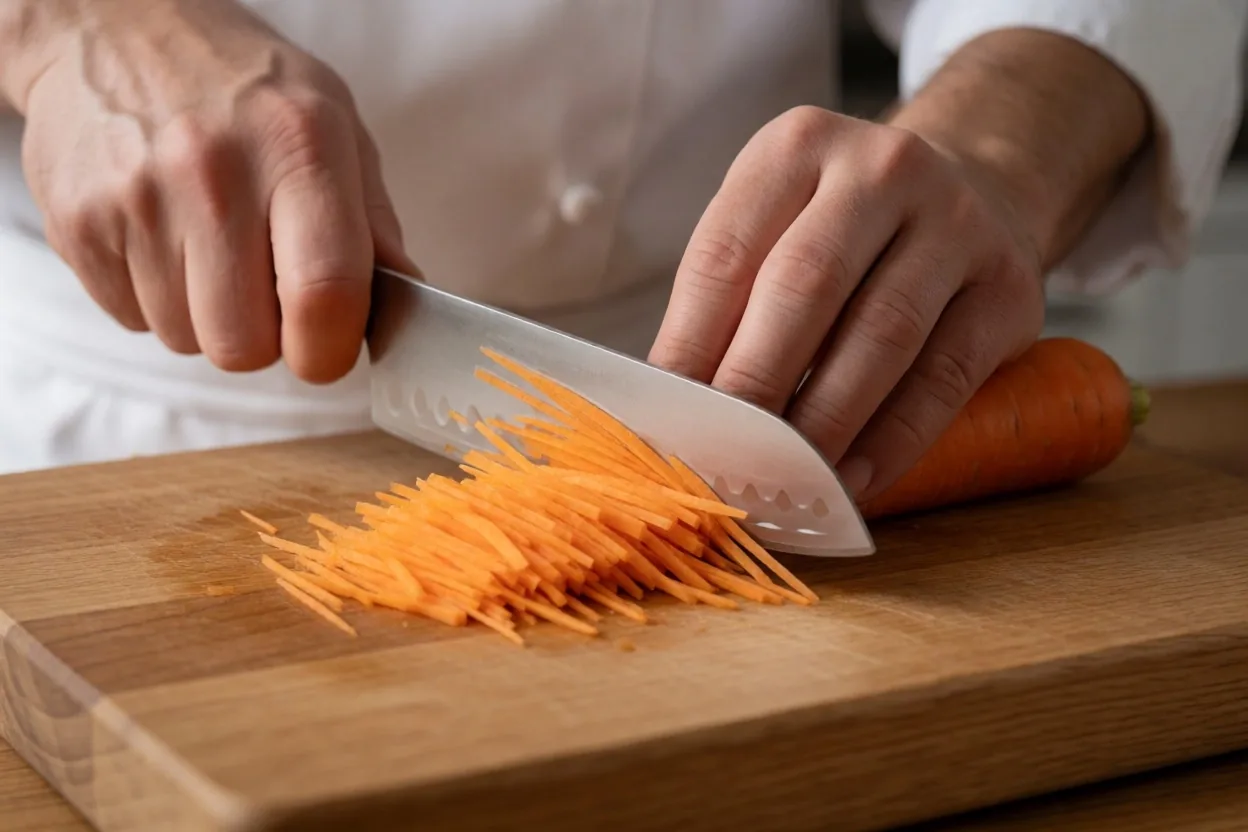
The first step to uniform cooking is a precise cut. Learning to handle different knives and knowing the classic shapes —julienne, mirepoix, chiffonade— is not a matter of aesthetics, but of functionality.
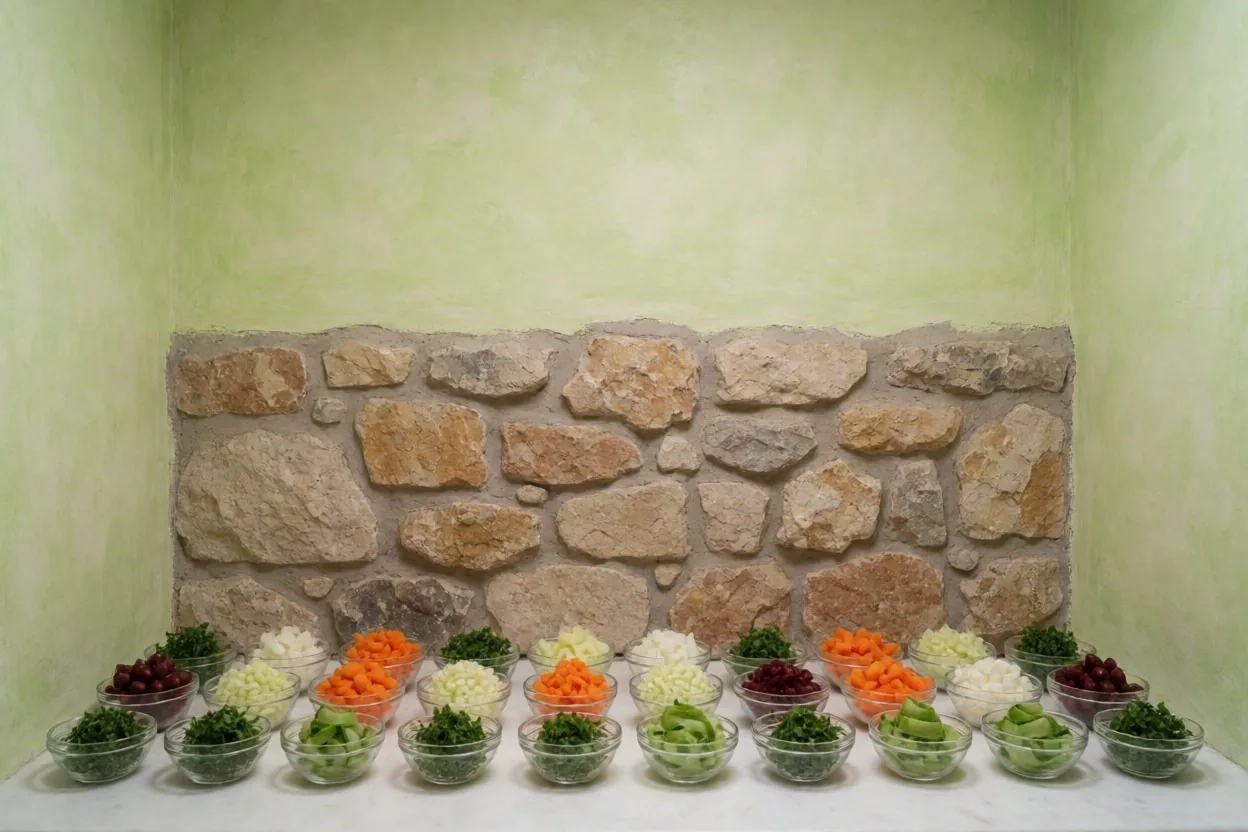
A correct cut ensures that all vegetable pieces cook at the same time, preventing some from being raw while others fall apart. It also improves the presentation of the dish and the speed of service, because an organized mise en place reduces the margin of error during cooking.
| Cut | Shape | Approx. size |
|---|---|---|
| Brunoise | Fine dice | 3 mm |
| Julienne | Long strips | 3 × 5 cm |
| Mirepoix | Coarse dice | 1 cm |
| Chiffonade | Leaf strips | 2 mm |
| Paysanne | Flat slice | 1 × 1 cm |
Stocks and Broths: The Base of Flavor
No commercial bouillon cube equals the depth and aroma of a homemade stock. We explain how to extract collagen and flavors from bones and vegetables through slow and controlled cooking.
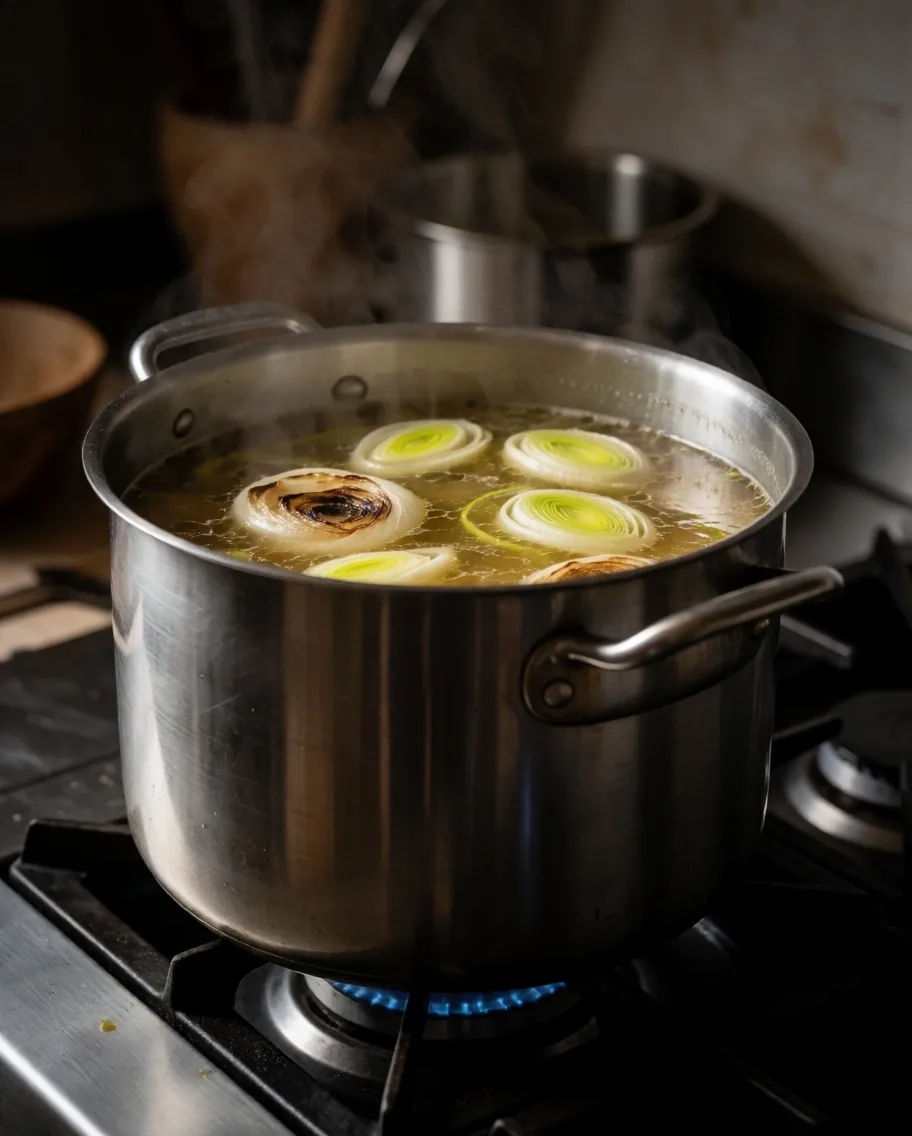
A good stock is the secret behind the best rice dishes, sauces, and stews. Learning to clarify and reduce it allows you to build dishes with professional flavor intensity at home. The difference between a cloudy broth and a clean stock is in the temperature: a violent boil emulsifies impurities, while a barely perceptible simmer keeps them at the bottom of the pot, ready to be removed.
Bones roasted in the oven before cooking. Deep amber color.
Raw bones, unbrowned vegetables. Base for consommés and light sauces.
White fish bones. Brief cooking, maximum 40 minutes.
Heat Control and the Maillard Reaction
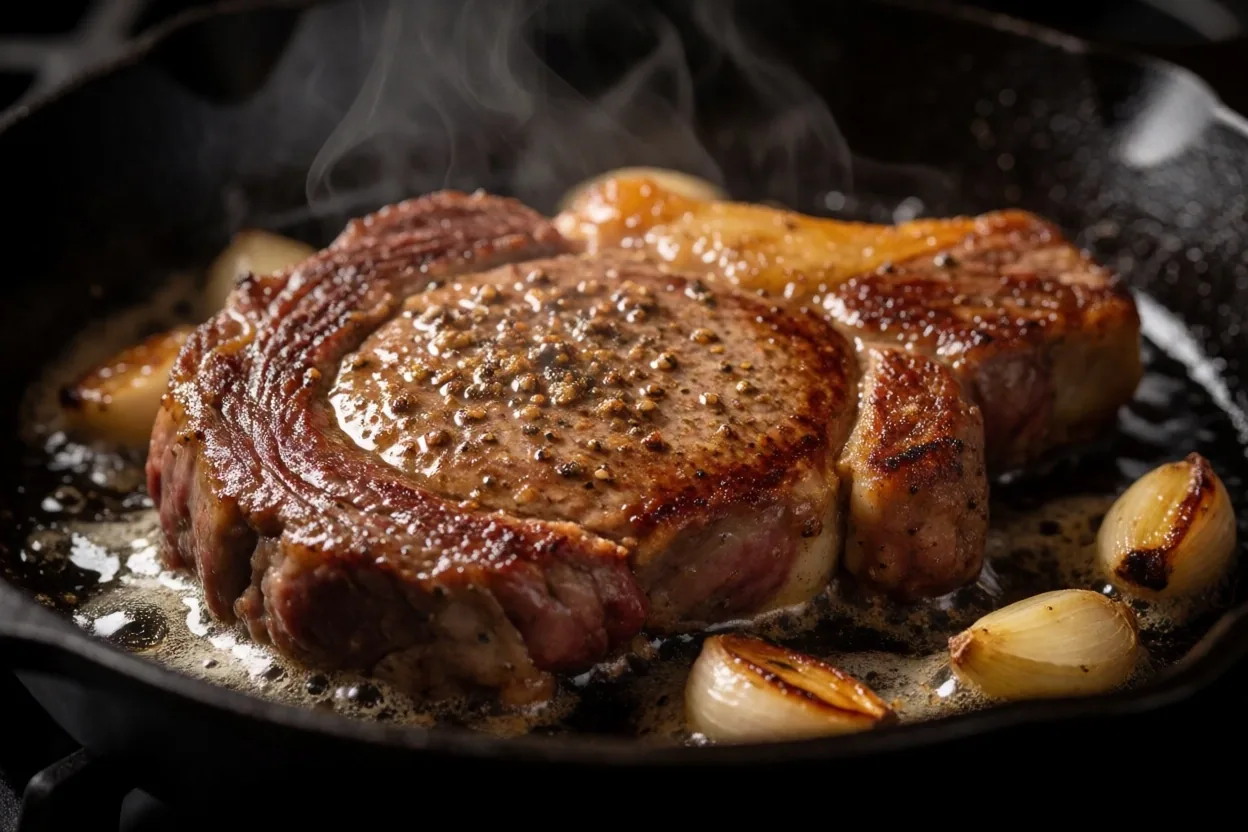
Understanding how fire interacts with food is the skill that separates someone who heats up food from someone who truly cooks. Searing meat triggers the Maillard reaction: amino acids and sugars transform on the surface, generating those toasted aromas and deep flavors that no marinade can imitate.
We also cover gentle and low-temperature cooking techniques to preserve the juiciness of delicate products. A pork loin cooked at 58 °C for two hours retains more moisture than one cooked over high heat for fifteen minutes. The difference is not in the ingredient, but in who controls the thermometer.
180 °C +
Golden surface, raw interior.
55–65 °C
Uniform juiciness, prolonged cooking.
Emulsions and Mother Sauces
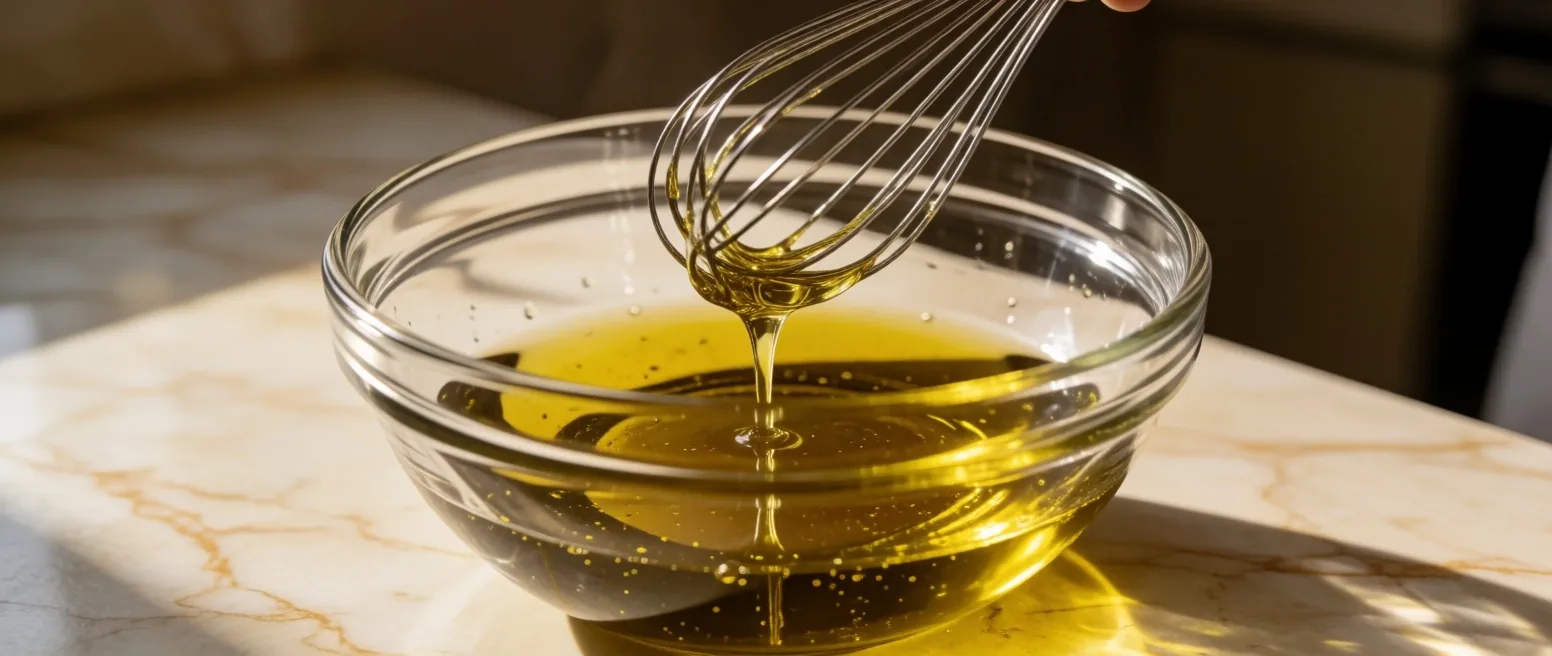
Sauces are the soul of Mediterranean cuisine. At Sabor Maestro, we teach how to master emulsions, from a handmade mayonnaise to a hollandaise sauce, explaining the chemistry that allows oil and water to combine stably.
We also cover the mother sauces of classic cuisine—Espagnole, velouté, béchamel, tomato, and hollandaise—which serve as a starting point for hundreds of variations. Mastering these five bases allows you to improvise accompaniments for almost any dish without relying on written recipes, because the cook understands the structure of the sauce, not just its steps.
An emulsion breaks when the fat phase and the aqueous phase separate. The cause is almost always the same: adding the oil too quickly before the yolk has time to absorb it. The solution starts with patience: one drop, then a thin stream, and only when the sauce thickens, a continuous drizzle.
- Espagnole— dark stock reduced with toasted roux.
- Velouté— light stock thickened with white roux.
- Béchamel— milk, white roux, nutmeg.
- Tomato— tomato, aroma, fat, slow reduction.
- Hollandaise— yolk, clarified butter, acid.
Handling Fish and Seafood
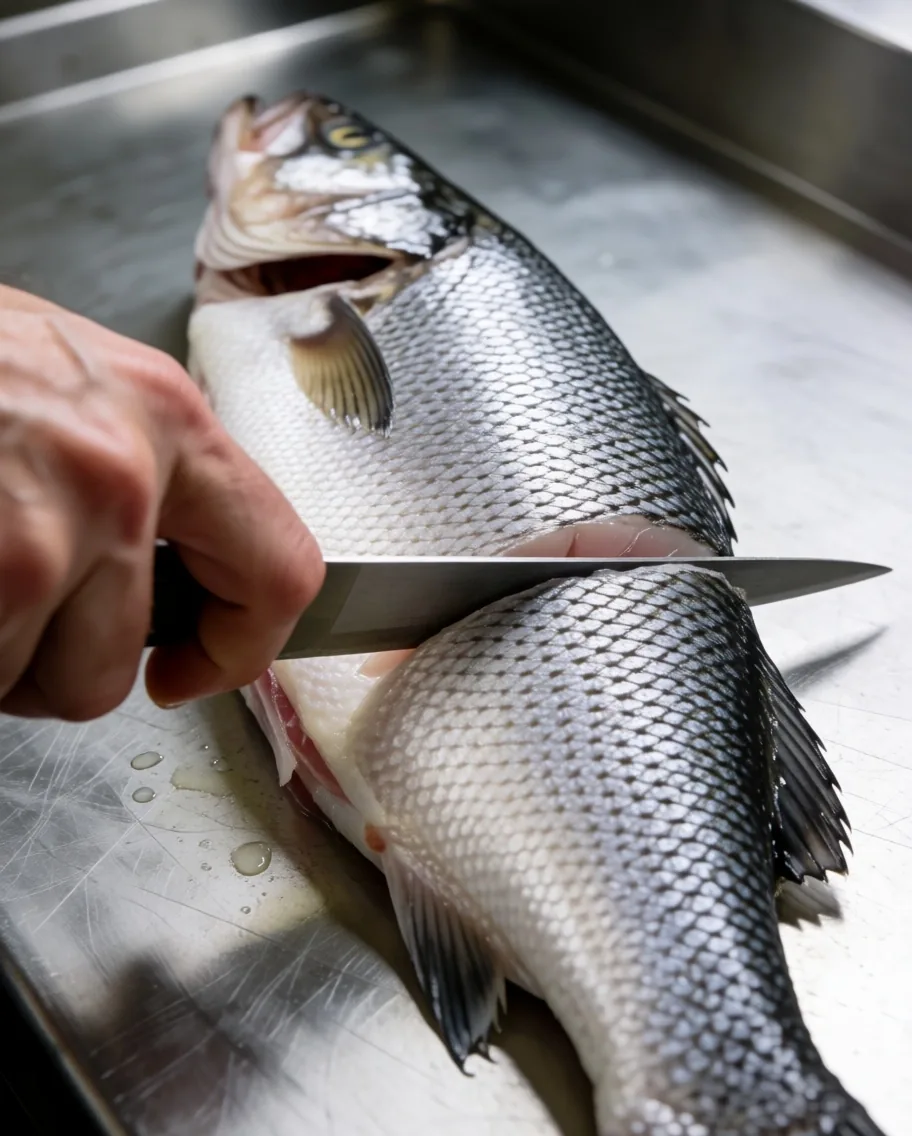
Cleaning and preparing seafood requires technique and respect. We show how to descale, fillet, and remove bones efficiently without wasting product. A clean cut along the spine makes the most of every gram of loin, and well-sharpened tweezers save minutes of work for each piece.
We also include tips on how to treat seafood so it maintains its firm texture and sea flavor, avoiding the prolonged cooking that often ruins these ingredients so prized in Spanish gastronomy. Prawns go from perfect to rubbery in less than a minute; the difference between the two is taking them off the heat when the center is still slightly translucent.
Translucent center, scales that open on their own when touched.
Boiling water, short time, immediate removal from heat.
The Science of Dough and Bread
Baking and pastry require almost scientific precision. We explain the role of gluten, the importance of kneading, and fermentation times to achieve breads with a crispy crust and fluffy crumb.
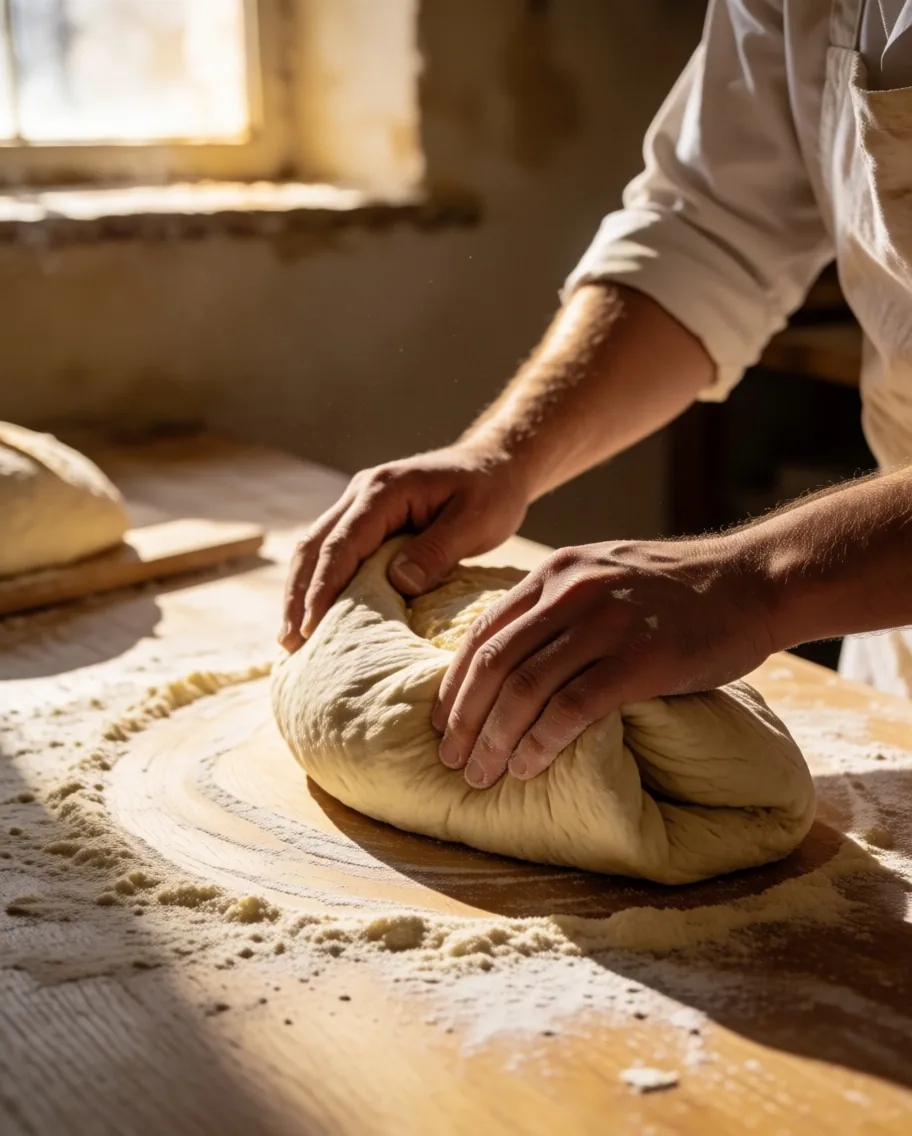
Gluten is a protein network that forms when wheat flour is mixed with water and worked. That network traps the gas bubbles produced by yeast during fermentation, and it is what gives bread its volume and elastic texture. Kneading too little leaves a weak network: the bread comes out flat and dense. Kneading too much breaks it: the crumb falls apart and the crust loses structure.
Ambient temperature and air humidity affect the dough as much as the recipe. In summer, yeast works faster and the dough requires less water; in winter, everything slows down. Understanding this relationship allows you to adapt proportions and obtain consistent results in any season.
Conservation and Food Safety
Advanced technique also includes knowing how to store what has been cooked. We provide guides on rapid cooling, proper packaging, and the shelf life of food in the refrigerator.
Maintaining the cold chain and avoiding cross-contamination are skills as important as knowing how to sauté a vegetable. An organized and safe kitchen is the foundation of a healthy home. This is not about paranoia, but about judgment: knowing which foods freeze well, how long a cooked dish lasts in the fridge, and why cooked rice should never be kept at room temperature for more than two hours.
| Cooked food | Fridge | Freezer | Notes |
|---|---|---|---|
| Rice | 3 days | 1 month | Cool in 2 h |
| Roast meat | 3–4 days | 2–3 months | Vacuum seal |
| Fish | 1–2 days | 1 month | Do not refreeze raw |
| Homemade stock | 4 days | 3 months | Reduce first |
| Vegetables | 3–5 days | 8 months | Blanch first |
Chef's Tricks for Day-to-Day
Sometimes, small details make the difference. Here we compile practical tips born from years of experience in professional kitchens, designed to save time and avoid frustration during the preparation of daily menus.
These are not industrial secrets or magic formulas. They are simple movements that, applied at the right moment, change the result of a dish without costing an extra euro. Each trick solves a specific problem that any home cook has encountered at some point.
Put these techniques into practice with the Sabor Maestro cookbook
Each recipe in the cookbook is annotated with the technique it applies, so that knowledge does not remain just theory. If you have a specific question about a procedure, write to us and we will answer you directly.